
Water Heater Installation Lakewood CO
No hot water? We install and replace tank and tankless systems same-day. Call (720) 303-5374
for immediate scheduling
Lakewood homeowners typically replace water heaters every 8–12 years — though hard water from the Jefferson County supply often shortens that window. This page covers tank and tankless installation, what the process looks like, and how we handle permits. Our licensed plumbers are available same-day or next-day, remove the old unit, and test the new system before leaving. One call handles gas lines, permits, and code compliance.
Tank vs. Tankless Water Heater Installation in Lakewood Homes
Homeowners in neighborhoods like Belmar, Applewood, and Green Mountain face the same decision: a 40–50 gallon storage tank or an on-demand tankless system. Tankless units free up utility room space — useful in the smaller mechanical closets common in Lakewood's older ranch homes — and typically reduce energy bills by 20–30% compared to storage tanks. Tank
units carry a lower upfront cost and work well for households with predictable hot water patterns.
Lakewood's hard water is hard on steel tanks. Mineral deposits build up faster here than in softer-water markets, corroding tanks and reducing efficiency — often pushing effective tank lifespan down to 8–10 years. Tankless systems handle minerals better when flushed annually. We install both types and walk you through which makes more sense given your household size, budget, and existing infrastructure.
Storage tanks hold 40–80 gallons of preheated water, delivering hot water the moment you open the tap. Tankless heaters warm water as it moves through the unit, meaning you won't run cold during back-to-back showers. Gas tankless models typically deliver 8–10 gallons per minute. electric tank units remain a good fit for Lakewood homes without gas service. Call to talk through recovery rates, operating costs, and which system fits your home.
What Drives Water Heater Replacement Costs in Lakewood
Getting an accurate picture of replacement costs means looking beyond the unit price. Fuel typeis the starting point — gas units run higher than comparable electric models. If your home's flue or chimney needs a new liner to meet current venting requirements, that adds $300–$600 to the job.
Jefferson County requires permits for both gas and electric water heater installations. We handle the permit application and include all fees in our quote, so the number you see reflects the real total. Haul-away and disposal of your old unit — typically $50–$75 — is included in our service pricing.
Switching from electric to gas means adding a new gas line. Older Lakewood homes — particularly in Eiber, Glennon Heights, and Morse Park — sometimes require electrical panel upgrades for electric units, running $800–$1,500 depending on the home's current capacity. Tankless installations take more time and cost more upfront, with long-term utility savings offsetting the difference.
We stock the most common sizes to prevent special-order delays. Standard tank swaps take 3–5 hours of labor. Jobs involving code updates or infrastructure changes may take a full day. Request a free estimate before committing
Gas and Electric Water Heater Installation Requirements in Lakewood
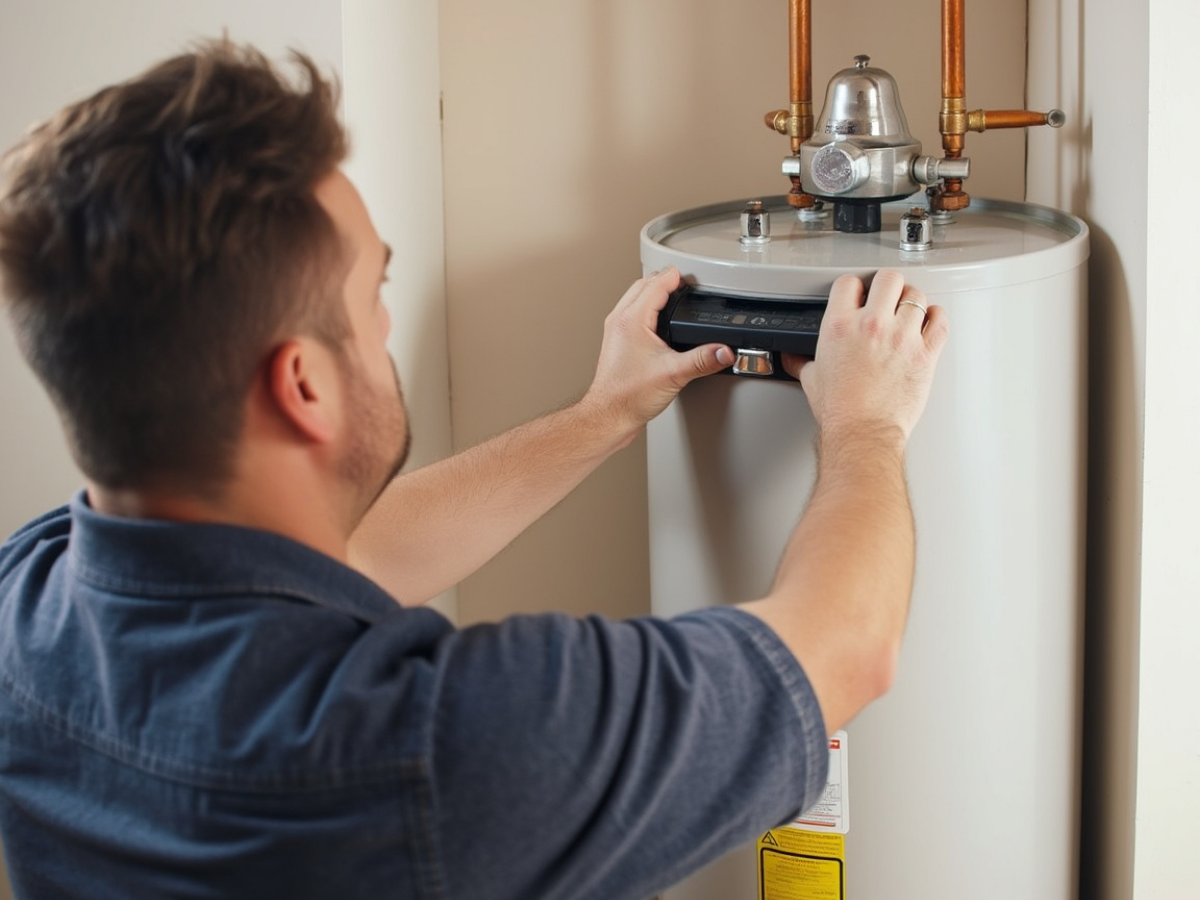
Gas water heaters require proper venting to the exterior — we install code-compliant flue pipes and fresh-air intakes on every gas job. Carbon monoxide safety is built into the process, not treated as an afterthought. Electric units don't require venting but draw significant amperage
and need the right circuit capacity to operate safely.
The installation picture varies depending on fuel type and whether you're replacing like-for-like or making a switch. Gas units recover faster after heavy use — a 50-gallon gas tank reheats in roughly 30–40 minutes. Electric models cost less to install and work well in Lakewood homes
without gas service, but require a 240V circuit with 30- or 40-amp capacity.
Most Lakewood homes are plumbed for natural gas, but older properties near Westland and Kendrick Lake may have undersized panels that need evaluation before an electric unit goes in. We check electrical capacity before recommending electric models and pull permits for both fuel
types, coordinating required inspections so you don't have to manage that process yourself.
Natural gas generally delivers lower operating costs — the per-therm rate runs less than the equivalent per-kilowatt-hour cost for electric heating in most scenarios.
Choosing the Right Size Water Heater for Your Lakewood Home
Undersized units mean cold showers. Oversized tanks waste energy reheating water that never
gets used. Getting the sizing right requires looking at how many people live in the home and how hot water use tends to stack up throughout the day.
A 40-gallon tank works for one to two people. A 50-gallon unit handles three to four people with normal usage patterns. Households of five or more — or homes with soaking tubs — typically need a 75-gallon tank. Tankless systems are sized by flow rate in gallons per minute rather than
storage capacity.
We count bathrooms, dishwashers, and washing machines and factor in simultaneous use. Two showers running at the same time require more capacity than sequential use. A four-person household in a typical Lakewood home generally lands on a 50-gallon tank or an 8 GPM tankless
system. We size to your actual situation, not a one-size-fits-all chart.
Water Heater Permits and Code Compliance in Jefferson County
Every water heater installation in Lakewood requires a permit — gas and electric alike. Licensed plumbers pull permits, schedule inspections, and stand behind code-compliant work. Skipping the permit process creates real problems at the point of sale, when a buyer's inspector flags
unpermitted work or a title company requests documentation.
Jefferson County inspectors check venting, gas line connections, seismic straps, and pressure relief valve installation. Work that doesn't pass creates warranty issues with the manufacturer and liability exposure for the homeowner. Emergency replacements can proceed immediately,
with the permit application submitted by the next business day. We manage all permit paperwork and coordinate inspector visits so you don't need to take time off work.
Code compliance is also a direct safety matter — properly installed temperature and pressure relief valves, drain pans, and overflow piping protect against the kinds of failures that cause water damage or worse. Every installation we complete meets current Jefferson County and
Colorado state codes
Same-Day Water Heater Replacement Across Lakewood
When your water heater fails in Belmar, Bear Creek, Union Square, or anywhere else in Lakewood, waiting days for a replacement isn't an acceptable option. We stock 40- and 50-gallon gas and electric units — Rheem, Bradford White, and A.O. Smith — and carry installation
supplies, gas connectors, and code-required parts on every truck. Most standard replacements are complete within four hours of arrival.
Call before 10 a.m. for same-day service. Winter in Lakewood drives water heater failures, and cold weather calls get prioritized — especially when a household has no hot water at all. Our plumbers drain and disconnect the old unit, test gas lines for leaks, check incoming water pressure, and run the new heater through a full heating cycle before signing off. You have hot water again the same day your old tank gives out.
FAQ
How long does water heater installation take in Lakewood, CO?
Tank installation takes 3–5 hours from start to testing. Tankless installations take 6–8 hours when we run new gas lines or upgrade electrical panels.
Do I need a permit to replace a water heater in Lakewood, CO?
Yes, Douglas County requires permits for gas and electric water heater replacements. Emergency replacements can proceed first, with permit application due the next business day. We handle all permit paperwork.
Can you install a water heater the same day in Lakewood, CO?
Yes, if we have your model in stock. Call (970) 703-0305 before 10 a.m. for same-day availability on common 40–50 gallon units.
What size water heater do I need for a 4-person home in Lakewood, CO?
A 50-gallon tank or 8 GPM tankless system works for typical usage. Homes with high demand or multiple simultaneous fixtures may need a 75-gallon tank or 10 GPM tankless unit.
Do you remove and dispose of old water heaters in Lakewood, CO?
Yes, we drain, disconnect, and haul away old units. We recycle tanks per Douglas County rules and include disposal in our service.
What's the difference between gas and electric water heater installation cost?
Gas units cost $200–$400 more due to venting and gas line connection work. Electric installations need dedicated 240V circuits but skip venting costs.